
- Updates
- News
Quanzhou Daily, Nov. 18 — Reporter Luo Jiansheng; Correspondent Lin Yinfeng
When Quanzhou was officially recognised as a UNESCO City of Gastronomy in October, the accolade confirmed what locals have long known: this ancient port breathes food culture. Now, riding the momentum of this global honour, the Quanzhou Taiwanese Investment Zone has announced a second cohort of 14 accredited "Zheng He Family Banquet" restaurants, presenting plaques to newly certified venues. As a signature initiative weaving Maritime Silk Road heritage into the vibrant fabric of Minnan (Southern Fujian) cuisine, the programme continues its expansion in the "post-designation era," reinforcing the city's culinary identity and deepening its cultural tourism appeal.
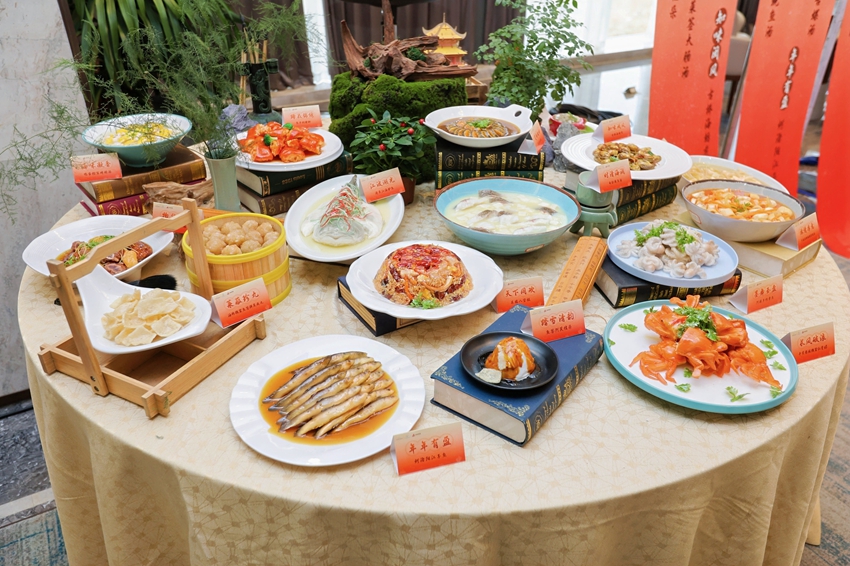
The "Zheng He Family Banquet" showcases calligraphy-inspired plating, poetic dish names, and meticulously sourced ingredients—an aesthetic homage to classical Chinese banquets.
Expanding Across Four Townships: Bringing the Family Banquet Closer to Home
The inaugural group of 12 tasting restaurants debuted in 2023 at the Cultural Tourism Economy Development Conference. With cohesive branding, themed private rooms, and three curated menu styles—the Connoisseur's Banquet, the Visitor Experience Banquet, and the Signature Flavour Banquet—each with capped pricing, the brand swiftly won recognition for its clarity, quality, and evocative storytelling.
To safeguard authenticity, group standards were established for key dishes such as Seafarer's Little Octopus, Hand-Pounded in the Old Style (Hand-Ground Baby Octopus) and Cloud-Soft Pork Pearls (Steamed Pork Balls), defining ingredients, preparation methods, and desired textures. These guidelines transformed what was once "oral tradition" into a codified, traceable culinary system.
Following a year of surging local demand and a rising tide of visitors, reservations at first-batch venues became increasingly scarce. The Taiwanese Investment Zone responded with a new round of selection. After rigorous field assessments—covering food safety, cultural interpretation, ingredient traceability, and production standards—14 restaurants were chosen from Dongyuan, Luoyang, Zhangban, and Baiqi.
The newly accredited venues range from beloved neighbourhood institutions to contemporary restaurants blending traditional recipes with intangible heritage innovation. Together with the first batch, they now form a network of 26 restaurants arranged across key residential clusters and visitor routes—a culinary ecosystem that brings the experience of a "banquet next door" into the rhythms of everyday life.
Rooted in Maritime Silk Road Heritage: Preserving the True Taste of Minnan
What distinguishes the "Zheng He Family Banquet" is not only its flavour profile but also its cultural depth. Historical accounts record that during the fifth and sixth maritime expeditions of the Ming dynasty, Admiral Zheng He visited Baiqi Hui Ethnic Township, where he aided in constructing the "Zheng He Dyke" and "Zheng He Canal," reducing tidal flooding and strengthening local cohesion. These stories remain enshrined in community memory.
This Maritime Silk Road inheritance forms the narrative core of the banquet, transforming every dish into a vessel of centuries-old cultural exchange.
The Taiwanese Investment Zone's coastal geography enriches the banquet's pantry:
— The Luoyang River estuary offers tender wild juvenile fish;
— The clear waters off the Takou coast yield roe crabs swollen with tide-rich flavour;
— Baiqi's razor clams and small octopus are prized for their firmness and purity.
These natural ingredients underpin the banquet's distinctive terroir.
All newly accredited restaurants abide by a "source-to-table" ethos paired with the revival of traditional techniques. A new restaurant in Zhangban, for instance, prepares Sea Essence Harmony, known locally as "Razor Clams in Gentle Duck-Egg Broth, a Maritime Silhouette." The dish—made with tofu, farmhouse duck eggs, and peak-season razor clams—is slow-stewed to evoke the mellow savour said to have pleased Zheng He himself.
Traceability systems ensure that every dish carries a recognisable sense of place:
— Breaking the Waves (Pan-Seared Roe Crab of the Takou Tides) uses roe crabs sourced exclusively from designated Fushan waters;
— Abundance Every Year (Autumn River Juvenile Fish in Silky Broth) uses only wild juvenile fish caught during the autumn–winter season.
Culinary Heritage as Tourism Strategy: Fueling Cultural and Economic Vitality
Against the backdrop of Quanzhou's UNESCO designation, the "Zheng He Family Banquet" has grown into a catalyst for the convergence of gastronomy and tourism. Short videos and documentaries about the project have surpassed one million views on major platforms; themed lantern installations drew more than 300,000 visitors during the 2025 Lantern Festival. The project has also made appearances on national primetime broadcasts.
The Taiwanese Investment Zone has undertaken promotional visits to cities such as Ningbo and Jinhua to integrate banquet experiences into regional travel itineraries, expanding cross-provincial collaboration.
With the second batch now launched, the initiative seeks to further amplify the synergy between "culinary attraction" and "cultural immersion." A themed travel route—In Search of Zheng He's Flavours—is currently under development, guiding visitors through iconic Maritime Silk Road landmarks such as Luoyang Bridge and the Zheng He Dyke, before inviting them to sample dishes like Taste of Minnan (Ancient Bridge Oyster Omelette, Born of Tide and Stone) and Joy Under Heaven (Dongyuan Eight-Treasure Rice, a Bowl of Festival Warmth).
Restaurants near historic Luoyang Old Street will also help revive the traditional communal round-table banquet reception, inviting intangible cultural heritage artisans to demonstrate techniques such as pork-ball steaming and arrowroot-starch making, allowing visitors to participate hands-on.
Meanwhile, several venues are introducing portable "banquet-to-go" offerings—vacuum-sealed Takou fish skewers, ready-to-eat ice jelly, and artisanal sauces—allowing travellers to carry home a taste of Quanzhou and, with it, a fragment of the city's living culinary heritage.
 Return List