
- Updates
- News
Quanzhou, Nov. 11 — Chen Yunqing, Quanzhou Daily / Converged Media
"Our team prepared three sets of signature dishes from the moment registration opened. We can't wait to share the flavours and stories of Quanzhou cuisine in the finals!" said Chef Chen, head chef of a well-known local seafood restaurant.
According to the organising committee of the 2025 Quanzhou Mountain–Sea Chef King Competition, after nearly a month of citywide registration, recommendations from industry associations, and strict expert review, more than 100 well-known catering enterprises and nearly 200 chefs have successfully advanced to the final round.
On 19–20 November, three sub-competitions—the Quanzhou Culinary Star Skills Competition, the Quanzhou Snack Skills Competition, and the Quanzhou Rural Cuisine Skills Competition—will take place at the Quanzhou Honour International Hotel in Donghai. This major culinary event will bring together taste, technique, and cultural storytelling, injecting fresh momentum into Quanzhou's status as a UNESCO Creative City of Gastronomy.
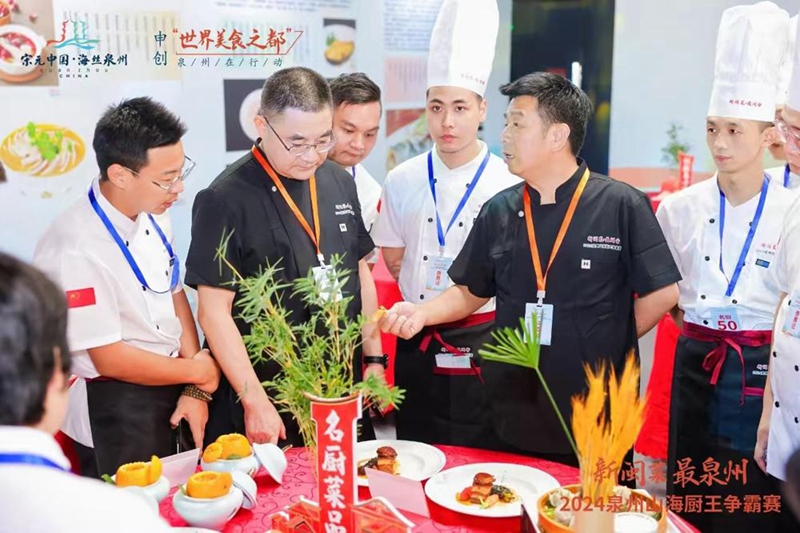
Judges and contestants exchanging views on dishes during the 2024 Quanzhou Mountain–Sea Chef King Competition. (Photo: Quanzhou Flavours)
UNESCO Gastronomy City Drives New Momentum
Competition Upgraded with Expanded Categories
On 31 October, UNESCO officially announced in Paris that Quanzhou had been admitted to its Creative Cities Network, becoming China's seventh City of Gastronomy. Behind this achievement lies years of work in researching, preserving, and promoting local culinary heritage.
The three previous editions of the Mountain–Sea Chef King Competition attracted more than 300 enterprises and nearly 500 chefs, uncovering over a hundred distinctive dishes—from traditional "ginger duck" slow-cooking techniques to innovative presentations of Quanzhou's iconic tusun dong (sea worm jelly). The event has also nurtured a generation of skilled culinary professionals, contributing significantly to Quanzhou's successful UNESCO application.
In 2025, the competition has been fully upgraded. Beyond high-end cuisine and traditional snacks, the new Rural Cuisine category highlights local agricultural produce and grassroots culinary traditions. Together, these categories form a diverse platform for showcasing Quanzhou's talent and its ambition to take local cuisine to the world—and welcome global visitors in return.
80% of Contestants Are Under 40
Three Generations Compete Side by Side
Registration data reveals a strong youth presence, with 80% of contestants aged under 40.
Among the young participants are recent culinary-school graduates bringing fresh ideas, as well as chefs with five to ten years of experience who combine classical techniques with contemporary creativity. They include chefs from luxury hotels developing high-end dishes, new-generation successors of historic snack shops, and innovative "new-farmer chefs" who specialise in using local rural ingredients.
Alongside them are seasoned veterans: bearers of intangible cultural heritage culinary techniques and master chefs with decades of experience in Minnan cuisine. Their collective presence creates a dynamic exchange across three generations—tradition meeting innovation, heritage meeting reinvention.
The organising committee notes that the three upcoming competitions will cover a broad range of categories and further cultivate local culinary talent.
"Chef's Dish Presentation" Adds Cultural Depth
Pre-Competition Briefing Ensures Smooth Operations
One highlight of this year's competition is the newly added "Chef's Dish Presentation" scoring segment. Chefs must explain the logic of their ingredient selection, the cultural context of their dishes, and the creative concept behind them. A panel of cultural experts will evaluate this segment.
Xu Xiaochun, Minnan cuisine scholar and expert advisor for Quanzhou's UNESCO application, said the new segment encourages chefs to engage deeply with the cultural significance of their dishes, strengthening the living heritage of Quanzhou's culinary traditions.
The newly introduced Rural Cuisine category also carries economic and cultural significance. According to He Pingping, Vice President and Secretary-General of the Quanzhou Outdoor Banquet Catering Association, rural chefs form a substantial workforce. They cater numerous village banquets annually, stimulating local industries such as ingredient supply, equipment rental, and event services—an important driver of rural revitalisation.
Many finalists in this category come from towns and villages across Quanzhou, showcasing dishes made with locally sourced ingredients. "The competition is not just about skills," He said, "but also about building a bridge from 'farm to table' and discovering chefs who can contribute to their hometowns' economic and cultural development."
To ensure smooth operations, the organising committee will hold a pre-competition briefing on 13 November at the Quanzhou Honour International Hotel. All contestants will familiarise themselves with the venue, receive detailed instructions on rules and procedures, and sit for a theoretical knowledge test in preparation for the live cooking stage.
 Return List